IMC & Sales Promotion

I

Retaining loyal customers should be the aim of any business. “If a company has identified its best customers, then it should make every effort to maintain and increase their loyalty” (Lamb, Hair, and McDaniel, 2018, p.328). It makes business sense to do this as “when a company retains an additional 5% of its customers each year, profits will increase by as much as 125%… improving customer retention by a mere 2% can decrease costs by as much as 10%” (Lamb, Hair, and McDaniel, 2018, p.328).

When I read the brief, I immediately thought of Just Salad, a counter-served custom salad restaurant, just opened on the corner of a prime location on a busy commercial street in Midtown Manhattan. I was walking by and I could not help but notice the queue going up the block and around the corner.
While there are lots of lunch options for the many office workers in the area, you could argue that nothing terribly appetizing. However, the queue outside Just Salad was not because people were all that eager for a new salad. It was because if the hungry workers forked up a $1 for a take-away reusable salad bowl, they would get unlimited toppings. A superficially genius idea. Salads in the area have a base price of about $7.99, toppings from avocado to onion are extra. Very quickly, by adding just a few extra ingredients, lunch can cost $20.

Just Salad’s owners clearly saw that people like salads, but do not like paying a lot for them. They also realised that customers like the idea of being sustainable and using less plastic and packaging. The reusable bowl is a form of loyalty programme. Nielson, a research outfit, found that more than 80% of consumers are more likely to stick with a brand that offers a loyalty programme. It may well be true that customers are more likely to stick with a brand that offers a reusable bowl.  If customers have the bowl sitting on their desk, already paid for, they are more likely to pop over to Just Salad for a lunch-time salad instead of the area’s other options. Plus, a $1 bowl feels less than a commitment that signing up for an actual loyalty programme so ironically may be more likely to get people to sign up for it. But those who do give their email will get 10% off their next order.

The bowl, with its noticeably blue colour and “Just Salad” written clearly, is a form of free walking advertising. New Yorkers tend not to be fazed by unusual sites but seeing a queue of people all holding blue bowls is attention getting. Indeed, seeing people walk with a blue bowl is also eye-catching.

The $1 sustainable bowl fits in with the restaurant’s healthy image, offering fresh produce served raw, roasted, baked or steamed. The restaurant boasts about hiring a chief sustainability officer and has invested in biodegradable disposables. The restaurant prides itself on top customer service and brags about its fast service. The unlimited toppings also complement its other offer of ten items under $10.

“Loyalty programs reward loyal customers for making multiple purchases… the objective is to build long-term, mutually beneficial relationships between a company and its key customers” (Lamb, Hair, and McDaniel, 2018, p.329). Just Salad is smartly utilizing brand loyalty and it will be interesting to see how they perform in the coming year. I suspect, this promotion will see sales continue to grow with repeat orders and customers retained.

Articles, I enjoyed reading more on this topic include:

https://www.justsalad.com/our-story

https://www.nielsen.com/us/en/insights/reports/2013/how-loyal-are-your-customers.html

Reference List:

Lamb, C.W., Hair, J.F., and McDaniel C. (2018) MKTG 12 Principles of Marketing Boston: Cengage

Nielsen (2013) ‘How Loyal are your Customers’

[online]

Available at: https://www.nielsen.com/us/en/insights/reports/2013/how-loyal-are-your-customers.html (Accessed: 2 March 2019)
IMC & Advertising

Marketing communications “from each promotional mix element (personal selling, advertising, sales promotion, social media, and public relations) should be integrated” (Lamb, Hair, and McDaniel, 2018, p.285). Integrated Marketing Communications (IMC) is the “careful coordination of all promotional messages for a product or a service to ensure the consistency of messages at every contact point at which a company meets a customer”
(Lamb, Hair, and McDaniel, 2018, p.285).

Promotion plays a key role in the Marketing Mix: Product, Place, Promotion, and Price. The Promotional Mix includes “advertising, PR,sales promotion, personal selling, and social media” (Lamb, Hair, and McDaniel, 2018, p.273). The promotion plan is an “integral part of the marketing strategy for reaching the target market… the main function of a marketer’s promotional strategy is to convince target customers that the goods and services offered provide a competitive advantage over the competition” (Lamb, Hair, and McDaniel, 2018, p.273)

“Few goods or services, no matter how well developed. Priced, or distributed, can survive in the marketplace without effective promotion – communication by marketers that informs, persuades, and reminds potential buyers of a product in order to influence an opinion or elicit a response” (Lamb, Hair, and McDaniel, 2018, p.273).

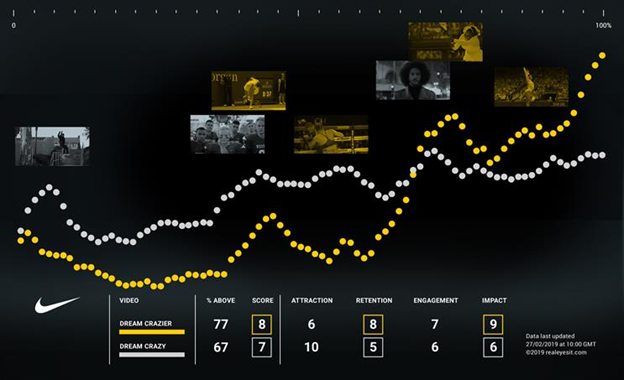
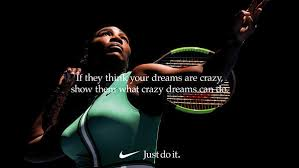
The first advertising campaign I thought of when I read the brief and the chapter was Nike’s recent ad campaign with Serena Williams providing a voiceover; the ad features many of the world’s best female athletes. The ad demonstrates female empowerment while highlighting the double standard female athletes face when they show emotion during sport; it’s a powerful ad: https://www.youtube.com/watch?v=whpJ19RJ4JY (Source: NIKE – Dream Crazier)

Nike sell athletic wear and sport apparel. In a recent survey published in Business Insider, Hanbury (2018) admits that “while Nike reigns supreme as the popular clothing brand among teens, it has lost market share in both apparel and footwear ranking to rivals Adidas, Vans, and Lululemon”. Nike is attempting to cement its position as the market leader and to make back lost ground surrendered to its rivals. The ad aims to set an emotional link to the target audience in an effort to secure brand loyalty through social justice.

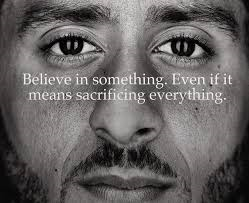
The ad fits with previous social justice ad campaign that featured Colin Kaepernick, an NFL quarterback who has since recently settled a collusion case against the NFL as he has been blackballed for taking a knee during the national anthem to highlight social injustice against police brutality against African Americans: https://www.youtube.com/watch?v=Fq2CvmgoO7I (Source: NIKE – Dream Crazy).

Both ads focused on television ad spots and heavily on social media campaigns. The ads have been effective. Lamb, Hair and McDaniel (2018) note that “Gen Zers want to work for their success… believe that brands need to be real.” Nike successfully demonstrate this wish to appear real and attempt to tap into the tween ambition to work for their success using this marketing campaign.

“Promotional strategy is closely related to the process of communication… as humans, we assign meaning to feelings, ideas, facts, attitudes, and emotions” (Lamb, Hair, and McDaniel, 2018, p.274). Nike is plugging into this through these ad campaigns by aligning themselves with just causes such as gender equality in the case of this latest campaign. Further to that, “as promotional strategies change… content marketing has become a crucial part of promotion” (Lamb, Hair, and McDaniel, 2018, p.273). Social media is used as a promotional tool and to facilitate conversation and social interaction online. Nike successfully empowered their consumers using these tools. The conversation will go on and Nike plan to remain at the center of it.

Articles, I enjoyed that I think you also will are listed below:

https://www.today.com/popculture/serena-williams-nike-dream-crazier-ad-celebrates-female-athletes-t149358

https://www.campaignlive.co.uk/article/nike-serena-williams-ad-beats-colin-kaepernick-spot-engagement/1577561

https://www.crfashionbook.com/culture/a26519254/nike-dream-crazier-serena-williams-campaign/

Reference List:

Hanbury, M., (2018) ‘These are the 10 clothing brands teens are obsessed with right now’ [online] Available at: https://www.businessinsider.in/these-are-the-10-clothing-brands-teens-are-obsessed-with-right-now/articleshow/66320794.cms (Accessed: 2 March 2019)

Lamb, C.W., Hair, J.F., and McDaniel C. (2018) MKTG 12 Principles of Marketing Boston: Cengage

Nike (2018) Nike – Dream Crazy [Youtube Video] Available at: https://www.youtube.com/watch?v=Fq2CvmgoO7I (Accessed: 2 March 2019)

Nike (2019) Nike – Dream Crazier {Youtube Video] Available at: https://www.youtube.com/watch?v=whpJ19RJ4JY (Accessed: 2 March 2019)

Pricing

P

“Price means one thing to the consumer and something else to the seller… to the consumer, it’s the cost of something. To the seller, price is revenue” (Lamb, Hair, and McDaniel, 2018, p.349). “Marketing managers are frequently challenged by the task of price setting… meeting the challenge of setting the right price can have a significant impact on the firm’s bottom line” (Lamb, Hair, and McDaniel, 2018, p.349). Lamb, Hair, and McDaniel point out that importance of creating the correct pricing strategy and how crucial it is for overall success.

Source: Moviepass
Image result for moviepass images
Source: Moviepass


Source: Moviepass

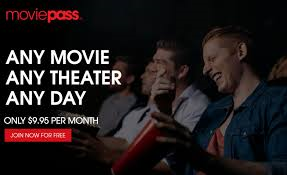
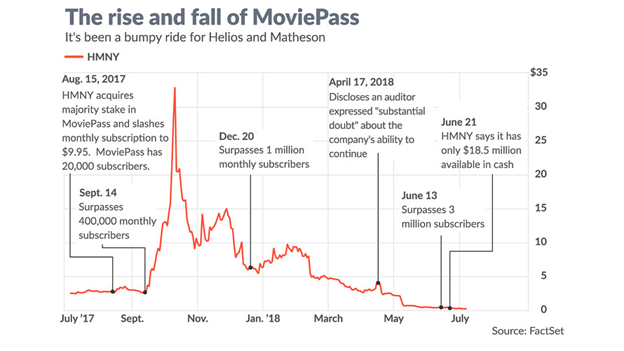
The first company I thought of when reading this chapter was Moviepass, (https://www.moviepass.com/), the movie theater subscription service that aimed to disrupt the US movie theatre industry by offering consumers access to one movie a day each month. Moviepass demonstrated a high level of innovation as it set out to change the way movie goers gained admission to the cinema; they offered unlimited movies for a set price per month. Initially, the price was $30 per month to watch a movie per day. It surpassed its competitors in the movie theatre subscription service in terms of market share and grew to over 3 million members. Upon being taken over Helios and Matheson Analytics Inc., Moviepass changed its price point to $9.95 per month for daily access. This led to more even more growth but ultimately, to its collapse and downfall of the app in its current form.

The cost of the Moviepass monthly subscription was $9.99 per month. As the average movie ticket price in the US is approximately $9 per visit (in NY, closer to $15) so for the consumer, this was an incredible deal; as in effect once the customer saw one movie they were almost at break even point already. Due to these massive perceived and actual savings, the target customers learned about the deal through advertising campaigns including the utilization of social media campaigns.

Moviepass membership grew rapidly to over 3 million members, however, it was not sustainable using the price point model. Significant costs and insufficient revenue led to financial instability and speculation was that the company was not able to meet its obligations. The app was not accessible one weekend last summer and speculation was rife that the app was in massive financial trouble. In an attempt to survive, the company made alterations to its membership plans; instead of price of $9.99 per month for daily access, the same price point now allowed access for 3 movies per month thus diminishing value and trust. Restrictions were placed on access to popular movies and blockbusters at peak times.

Customer service has been abysmal and low with limited communication. Relationships and customer loyalty were badly strained due to a raft of cancellations and change of price point.

It will be interesting to see how Moviepass perform over the coming months. AMC, a major movie theater chain in the US have introduced a rival movie subscription service called Stubs A-List which is limited to AMC theaters that allows access to view 3 movies per week for $19.95 per month. However, Moviepass allows access to 91% of the movie theatres in the US, AMC makes up just 23%.

Articles, I enjoyed on this topic and I think you will too, include:

https://www.businesswire.com/news/home/20180806005321/en/MoviePass%E2%84%A2-Launches-New-Pricing-Plan-Built-Mass

https://www.hollywoodreporter.com/news/moviepass-switches-back-30-films-month-plan-1107855

https://www.marketwatch.com/story/the-spectacular-rise-and-fall-of-moviepass-2018-07-09-101033943

https://www.pcmag.com/news/362001/report-moviepass-to-roll-out-surge-pricing-for-popular-film

https://www.hollywoodreporter.com/news/how-long-can-moviepass-keep-burning-cash-1078098

Reference List:

Lamb, C.W., Hair, J.F., and McDaniel C. (2018) MKTG 12 Principles of Marketing Boston: Cengage